The Audition Without a Song
La audición sin canción
Leo lleva días intentando copiar una canción para entrar en la banda del colegio. Cuando llega su turno, decide tocar algo que no había preparado.
Escucha The Audition Without a Song en inglés
Narración en inglés ·
Leo had borrowed his cousin's drumsticks and spent a week copying a song from an online video. The drummer made it look easy. Leo could play the beginning, but whenever the music became faster, his hands seemed to belong to two different people.
Leo había pedido prestadas las baquetas de su primo y llevaba una semana copiando una canción de un video de internet. El baterista hacía que pareciera fácil. Leo podía tocar el principio, pero cuando la música se aceleraba, sus manos parecían pertenecer a dos personas distintas.
The school band was holding auditions on Wednesday. Singers, guitarists and anyone who played another instrument could try. Leo had already written his name on the list. Crossing it out would be simple. Explaining why to his younger brother, who had helped him practise on kitchen pans, would be harder.
La banda del colegio celebraba audiciones el miércoles. Podían presentarse cantantes, guitarristas y cualquiera que tocara otro instrumento. Leo ya había escrito su nombre en la lista. Tacharlo sería sencillo. Explicarle el motivo a su hermano pequeño, que lo había ayudado a practicar con las ollas de la cocina, sería más difícil.
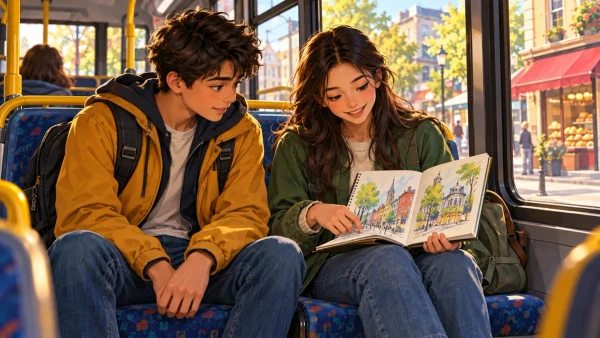
On the bus that morning, he listened to the song one last time. Then his headphones stopped working. Without the music, he heard other sounds: the engine beneath his feet, the doors opening with a hiss, rain tapping against the glass. His fingers began repeating the pattern on his knees.
En el autobús de aquella mañana escuchó la canción una última vez. Entonces sus auriculares dejaron de funcionar. Sin música, oyó otros sonidos: el motor bajo sus pies, las puertas abriéndose con un siseo, la lluvia golpeando el cristal. Sus dedos empezaron a repetir aquel patrón sobre sus rodillas.
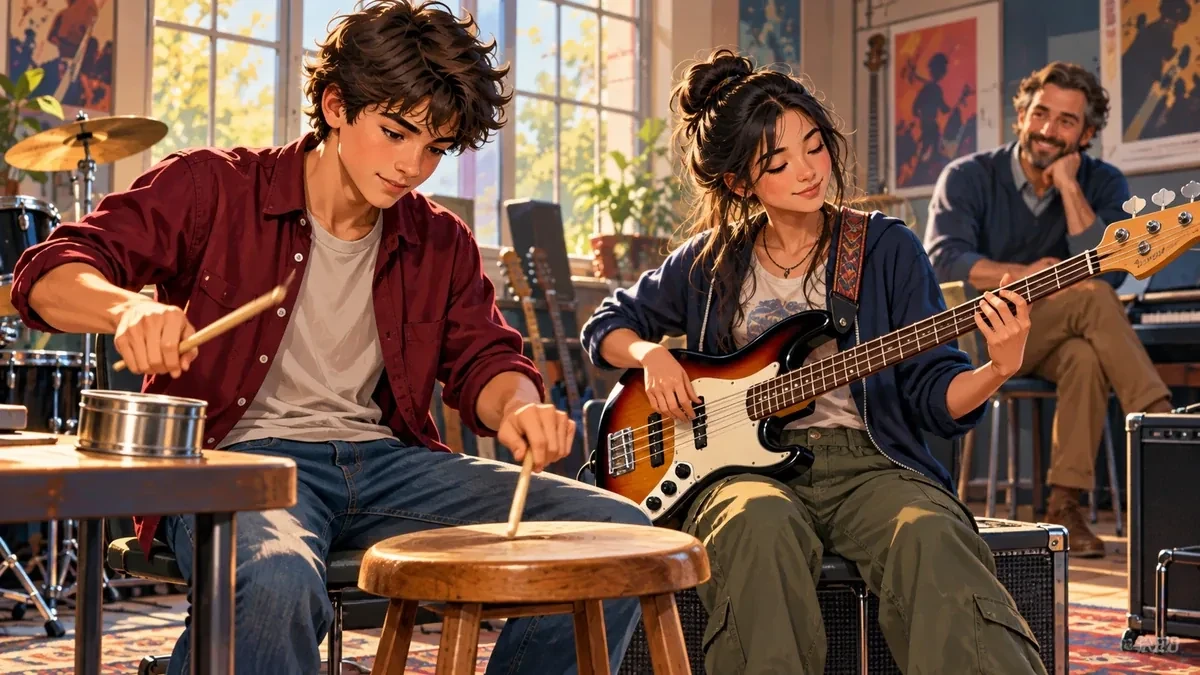
Outside the music room, Leo could hear a guitarist playing beautifully. His stomach tightened. Inside, a girl with a bass guitar was helping the music teacher. "What are you going to play?" the teacher asked when his turn came. Leo looked at the drumsticks. "I'm not sure anymore."
Desde fuera del aula de música, Leo oía a un guitarrista que tocaba de maravilla. Se le encogió el estómago. Dentro, una chica con un bajo ayudaba a la profesora de música. —¿Qué vas a tocar? —le preguntó la profesora cuando llegó su turno. Leo miró las baquetas. —Ya no estoy seguro.
The teacher pointed to a practice drum, but Leo was looking at a wooden stool beside it. "Could I use that too? And the empty tin on your table?" She checked that the objects were safe to use, then moved them closer. The girl with the bass raised an eyebrow. Leo nearly changed his mind.
La profesora señaló un tambor de práctica, pero Leo estaba mirando un taburete de madera que había a su lado. —¿Podría usar eso también? ¿Y la lata vacía de su mesa? Ella comprobó que se podían utilizar sin peligro y los acercó. La chica del bajo levantó una ceja. Leo estuvo a punto de cambiar de idea.
He started with the low sound of the stool: the bus engine. The metal tin became the rain. A light tap along the table's edge marked the doors closing. At first, he played too quickly. He stopped, breathed and began again. This time, the pattern held together. The bass player listened, then added four quiet notes.
Empezó con el sonido grave del taburete: el motor del autobús. La lata se convirtió en la lluvia. Un golpecito en el borde de la mesa marcaba el cierre de las puertas. Al principio tocó demasiado rápido. Se detuvo, respiró y empezó de nuevo. Esta vez, el patrón mantuvo su forma. La bajista escuchó y luego añadió cuatro notas suaves.
They repeated the rhythm until the teacher lifted her hand. Leo expected her to ask for a proper song. Instead, she asked where the idea had come from. "The number sixteen bus," he said. The bass player laughed. "I take that one too. Yours sounds much better."
Repitieron el ritmo hasta que la profesora levantó la mano. Leo esperaba que le pidiera una canción de verdad. En cambio, le preguntó de dónde había sacado la idea. —Del autobús dieciséis —respondió. La bajista se rio. —Yo también voy en ese. El tuyo suena mucho mejor.
Leo did not become the band's drummer that afternoon. The teacher invited him to the next practice and said they would work on keeping a steady beat. Walking home, he recorded the sound of a loose gate in the wind. He still wanted to learn the difficult song. But beside its title in his notebook, he wrote another one: "Wednesday Morning, Bus Sixteen." This time, he already knew how it started.
Leo no se convirtió en el baterista de la banda aquella tarde. La profesora lo invitó al siguiente ensayo y le dijo que trabajarían en mantener un pulso constante. De camino a casa, grabó el sonido de una verja suelta moviéndose con el viento. Todavía quería aprender la canción difícil. Pero junto a su título en el cuaderno escribió otro: «Miércoles por la mañana, autobús dieciséis». Esta vez ya sabía cómo empezaba.
Vocabulario del cuento
Palabras en inglés de The Audition Without a Song con su traducción al español.
- audition
- audición, prueba musical
- drumsticks
- baquetas
- beat
- pulso, ritmo
- stool
- taburete
- rhythm
- ritmo
- bass
- bajo, instrumento musical
- repeated
- repitió
- steady
- constante, estable
Preguntas de comprensión
Responde en inglés y despliega cada respuesta para comprobarla.
What has Leo been trying to prepare for the audition?
Ver respuesta
He has been trying to copy the drum part from a popular song.
Where does the rhythm he plays at the audition come from?
Ver respuesta
It comes from everyday sounds, including the bus engine, the bus doors and the rain.
What does the teacher offer Leo, and what must he still work on?
Ver respuesta
She invites him to the next band practice, but says they need to work on keeping a steady beat.